
The Five Things You Actually Need to Run Outside When It’s Cold
Because apparently some of us still haven't learned that treadmills exist
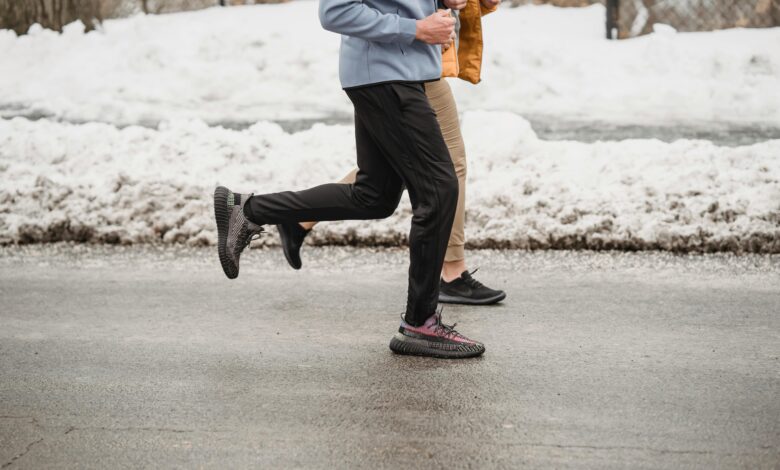
Look, we get it. You’re a “real runner.” You don’t do “hamster wheels.” The crisp winter air “invigorates” you. Fine. But before you slip on black ice while wearing cotton sweatpants and realize that hypothermia is, in fact, a thing that happens in suburban Indiana, let’s talk about what you actually need to survive your little Arctic expedition.
Forget the influencer hauls and the gear reviews written by people who think 45 degrees is “cold weather running.” Here’s what will keep you from becoming a cautionary tale at your local running club:
1. Traction devices that make you look ridiculous but keep you vertical
Yes, those little rubber contraptions with metal spikes that slip over your shoes. The ones that make you walk like a newborn giraffe on tile floors. YakTrax, Microspikes, Kahtoola—pick your poison. They’re unglamorous,  they’re annoying to put on with frozen fingers, and they’re absolutely non-negotiable once the temperature drops below freezing. Because nothing says “I’m training for a spring marathon” quite like a fractured tailbone in January.
2. A base layer that actually wicks (revolutionary, we know)
Merino wool or synthetic—choose your fighter. What you don’t want is that ancient college hoodie made of cotton, which will soak up your sweat and turn you into a hypothermic popsicle the moment you stop moving. Yes, proper base layers are expensive. So is an ER visit for severe hypothermia. Budget accordingly.
3. A headlamp or reflective vest, unless you enjoy playing chicken with Subarus
The sun sets at 4:47 p.m. now. You are not visible. You are, in fact, a dark-clothed blur moving erratically near traffic. Drivers are texting. You need to be seen. A headlamp serves double duty—visibility plus the ability to see that patch of black ice before you hit it. Reflective vests make you look like a crossing guard. Embrace it.
4. Mittens, not gloves, because your fingers would actually like to remain attached
Here’s some science: your fingers stay warmer when they’re together, sharing body heat like little refugees huddling for warmth. Mittens over gloves. Every. Single. Time. Bonus points if they’re windproof. Extra bonus points if you can still operate your phone to call for help when you inevitably get lost because all the trail markers are covered in snow.
5. A phone and some way to carry emergency supplies (because denial isn’t a survival strategy)
A running belt, a vest with pockets, a FlipBelt—whatever gets you to actually carry your phone, ID, and a credit card or some cash. Add a mylar emergency blanket if you’re going long or remote. They cost $3, weigh nothing, and could save your life if you twist an ankle three miles from your car. Revolutionary concept: planning for things to go wrong.
The truth is, cold-weather running is perfectly safe—if you’re not an idiot about it. So invest in the basics, leave the ego at home with the cotton hoodie, and remember that the treadmill is always there, waiting, with its climate-controlled embrace and zero chance of frostbite.
Not that you’d ever use it, of course. You’re a real runner.